
The Role of Circular Economy in Business Innovation and Sustainability
Anh Thu Pham & Saeid Sodagar
Coach: Cristián Burr Raty
May 2026
- Introduction
The concept of Circular Economy has recently gained significant attention among researchers and professionals as one of the most practical approaches to achieving sustainability (Winans et al., 2017). Circular economy represents a shift from the traditional linear model of “take, produce, and dispose” toward a system that focuses on reducing waste and keeping materials in use for as long as possible. This approach involves closing, slowing, and narrowing material flows by encouraging practices such as reusing, repairing, recycling, and redesigning products. Instead of sending end-of-life products to landfills, circular economy aims to return materials back into production processes. According to Nikolaou et al. (2021), the concept combines two important dimensions: “circular,” which emphasizes material cycles, and “economy,” which creates new opportunities for businesses and society.
As environmental challenges and resource scarcity continue to increase, circular economy has become increasingly important for governments, businesses, and researchers. It encourages companies to rethink product design, manufacturing processes, and distribution systems in more sustainable ways. At the same time, circular economy creates opportunities for innovation, new business ecosystems, and job creation.
The purpose of this essay is to examine how circular economy supports sustainable entrepreneurship and business innovation. The essay discusses the principles of circular economy, its connection to entrepreneurship, and the opportunities and challenges it creates for businesses. In addition, practical examples and the relationship between circular economy and ENTRECOMP entrepreneurial competencies will also be explored.
- Theoretical Background: What is Circular Economy?
In a linear economy, the production process generally follows the pattern of “Take, Make, Dispose.” Raw materials are extracted from nature, transformed into products, used by consumers, and eventually discarded as waste. This system has contributed significantly to environmental problems such as pollution, excessive resource consumption, and climate change (Geissdoerfer et al., 2017).
In contrast, the circular economy follows a regenerative model based on principles such as reducing, reusing, repairing, and recycling products and materials. Instead of treating products as disposable, the circular economy encourages extending product life cycles through maintenance, repair, remanufacturing, and reuse. Materials that reach the end of one product’s life cycle can become resources for another product, creating a closed-loop system (McDonough & Braungart, 2002).
The first strategy is reducing, which focuses on minimizing the use of raw materials and energy during production. This may include designing lightweight products, reducing packaging, or improving manufacturing efficiency. Reduction is generally considered more sustainable than recycling because it prevents waste generation at the source (Lacy et al., 2020).
Reuse extends the life cycle of products by allowing them to be used multiple times without major reprocessing. Examples include second-hand markets, refillable packaging, and product-sharing services. Reuse preserves more material and energy value compared to recycling, which often requires additional energy and processing time.
Repair and maintenance are also important strategies for extending product life cycles. In many industries, products are intentionally designed with short life spans or limited repairability, leading to rapid consumption and waste generation. Circular economy challenges this approach by encouraging durable and repairable product design. According to Cradle to Cradle: Remaking the Way We Make Things, products should be designed in ways that allow materials to circulate continuously within biological or technical cycles instead of becoming waste after use (McDonough & Braungart, 2002).
Recycling refers to the recovery and processing of waste materials into new products. Although recycling is one of the most recognized circular strategies, researchers argue that recycling alone cannot fully achieve circularity because material quality and energy are often lost during recycling processes. For this reason, circular economy prioritizes reduction, reuse, and repair before recycling.
Another important concept within circular economy is product life cycle extension. Extending product life cycles reduces the need for constant production of new goods and lowers environmental impacts. Strategies such as modular product design, replaceable components, and remanufacturing help products remain functional for longer periods.
According to The Circular Economy Handbook, circular economy can also be viewed as a roadmap for more sustainable and resilient business practices. Instead of relying heavily on scarce and expensive raw materials, companies can focus on improving resource productivity and developing service-oriented business models that create long-term value and more stable revenue streams (Lacy et al., 2020).
- Circular Economy and Entrepreneurship
3.1 Business Opportunities
According to the Circularity Gap Report 2026, the global economy loses an estimated €25.4 trillion in value each year due to inefficient use of materials and resources (Mudie & Soria, 2026). The Circular Economy Handbook identifies four major categories of waste from which economic value can be recovered:
There are four distinct types of waste categories from which to capture this value:
- Wasted resources: Use of materials and energy that cannot be effectively regenerated over time, such as fossil energy and non-recyclable material.
- Wasted capacity: Products and assets that are not fully utilized throughout their useful life.
- Wasted lifecycles: Products reaching end of use prematurely due to poor design or lack of second-use options
- Wasted embedded value: Components, material, and energy not recovered from waste stream.
(P.Lacy et al, 2020, p. 36)
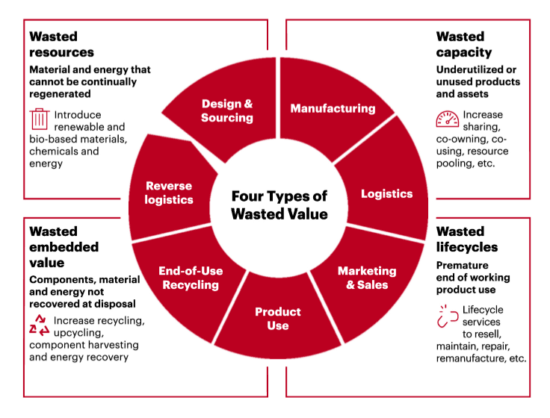
Picture 1. Four categories of waste (P. Lacy et al, 2020, p. 36)
3.2 Innovation and Sustainable Value Creation
To seize the opportunity value of redefining waste, five business models underpinning the transformation to a circular economy are introduced. Although these models have been widely recognized by various public and private sector organizations, the scale of adoption has not been equally distributed across the models, and the pace of implementation has been slower than hoped. However, these models are still valuable for research and development efforts that aim to support the transition toward a circular economy. (P. Lacy et al, 2020, p. 36)
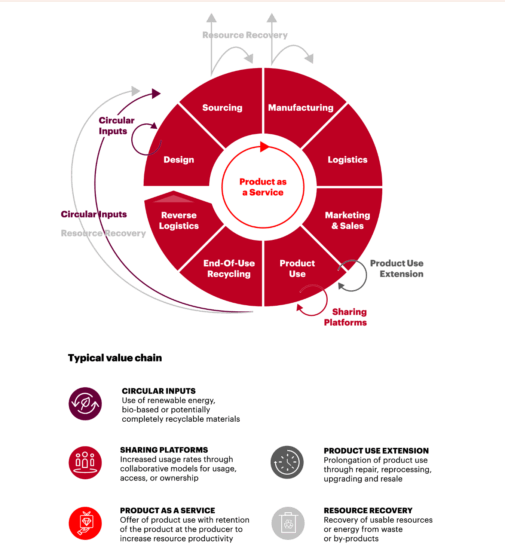
Picture 2. Circular value loop – the five business models (P. Lacy et al, 2020, p. 36)
3.3 Challenges for Entrepreneurs
The adoption of circular economy models remains challenging because these barriers are highly interconnected. Financial limitations reduce the ability of businesses to invest in new technologies, while limited technological development affects the quality and efficiency of recycled materials. Poor material quality can weaken consumer trust, and low consumer demand further reduces incentives for business investment. In addition, inconsistent regulations create uncertainty for companies attempting to adopt circular practices. These interconnected challenges form a reinforcing cycle that requires coordinated action among governments, industries, and consumers to overcome (EVS Institute, 2025).
- Practical Examples
A circular economy has been proposed as a solution to the wasteful and inefficient nature of the traditional linear economy. In recent years, many companies have claimed to embrace circular economy principles by modifying product designs, innovating business models, and offering new services to customers. However, circular economy is not limited to the business sector alone. Its principles are increasingly embedded in government policies, international forums, academic institutions, and consultancy practices (Charter, 2019, p. 103).
In Finland, students and entrepreneurs receive various forms of support for innovations that promote sustainable development from social, economic, and environmental perspectives. One example is the HUBS Sustainable Entrepreneurship Grant at Tampere University. The authors received support for a business idea involving shoe-care products made from spent coffee grounds. Another inspiring example is Paahtu, a Finnish brand producing coffee-based firewood from spent coffee grounds. These products have gained attention through startup competitions and consumer interest, with 100 bags reportedly sold within five hours after launch. Spent coffee grounds are an example of secondary materials that can be recycled and transformed into valuable products. This approach helps reduce waste while fostering a more resilient ecosystem across industries.
According to Binder and Braun (2024), valuable materials recovered from waste streams can be reintegrated into production cycles through reuse and recycling, giving new life to materials that were previously considered waste. For example, Closing the Loop specializes in recovering valuable materials such as gold, silver, and rare earth metals from discarded mobile phones and reintegrating them into supply chains.
Another example of circular economy in practice is industrial symbiosis, where waste or by-products from one industry become resources for another. Binder and Braun (2024) explain that repurposing industrial by-products can create economic and environmental benefits simultaneously. One example is the collaboration between McDonald’s and Neste, where used cooking oil from McDonald’s restaurants is converted into Neste MY Renewable Diesel.
- Connection to ENTRECOMP Competencies
Circular economy is connected to several competencies in the ENTRECOMP framework. Such as creativity, spotting opportunities, or sustainable thinking. Circular business models require people to think differently. Instead of following traditional systems based on “produce, use, and throw away,” circular economy encourages more innovative and sustainable solutions.
One of the most important competencies related to circular economy is creativity. Circular systems depend heavily on new ideas and alternative ways of solving problems. Entrepreneurs need to design products that last longer, can be repaired, reused, or recycled more easily. This often requires creative thinking during both the design and production stages.
For example, many businesses today use waste materials to create new products. Coffee waste can be turned into bio-based materials, plastic waste can become furniture or clothing, and old electronics can be refurbished and sold again. These ideas are based on seeing value in materials that are usually considered useless. According to Cradle to Cradle: Remaking the Way We Make Things, products should be designed so that materials can remain in continuous cycles instead of becoming waste (McDonough & Braungart, 2002). Developing these kinds of systems requires creativity and innovative thinking.
Another important ENTRECOMP competency is spotting opportunities. The circular economy creates business opportunities by addressing environmental problems. Entrepreneurs can find challenges such as pollution, waste generation, or resource scarcity and turn them into useful products or services. In this way, environmental problems become potential market opportunities.
For example, repair services, reusable packaging systems, rental platforms, and recycling businesses have become more common because consumers are interested in sustainable alternatives. In The Circular Economy Handbook, Lacy et al. (2020) explain that circular economy can create economic value through resource efficiency, innovation, and new business models. Entrepreneurs who recognize these trends can develop competitive business ideas.
Circular economy is also linked to sustainable thinking. Entrepreneurs working with circular principles usually consider not only profit, but also environmental and social impacts. They think about how products affect resource use, waste generation, and sustainability over time.
In addition, circular economy encourages people to think about the full life cycle of products. Instead of focusing only on production and sales, entrepreneurs also consider maintenance, reuse, recycling, and material recovery. This approach supports a more sustainable relationship between business activities and the environment.
- Conclusion
Circular economy has emerged as an important approach for addressing environmental challenges, resource scarcity, and unsustainable production systems. Unlike the traditional linear economy, circular economy focuses on reducing waste, extending product life cycles, and maintaining materials within continuous circulation through practices such as reuse, repair, remanufacturing, and recycling. As discussed throughout this essay, circular economy not only supports environmental sustainability but also creates new opportunities for entrepreneurship, innovation, and economic development.
The essay has shown that circular economy encourages businesses to rethink traditional business models and develop more sustainable solutions. Companies can create value by transforming waste into resources, improving resource efficiency, and designing products with longer life cycles. Practical examples, such as products made from spent coffee grounds and industrial collaborations involving waste reuse, demonstrate how circular principles can be applied in real business contexts.
In addition, circular economy strongly connects with ENTRECOMP entrepreneurial competencies, particularly creativity, spotting opportunities, and sustainable thinking. Entrepreneurs play an important role in developing innovative solutions that respond to environmental and societal challenges while creating economic value.
Although the transition toward a circular economy still faces challenges related to technology, investment, regulations, and consumer behavior, its long-term potential remains significant. Circular economy represents not only an environmental strategy, but also a promising direction for future entrepreneurship and sustainable business development.
References
Geissdoerfer, M., Savaget, P., Bocken, N. M. P., & Hultink, E. J. (2017). The Circular Economy – A New Sustainability Paradigm? Journal of Cleaner Production, 143, 757–768. Elsevier.
Lacy, P., Long, J., & Spindler, W. (2020). The Circular Economy Handbook: Realizing the Circular Advantage. London: Palgrave Macmillan.
McDonough, W., & Braungart, M. (2002). Cradle to Cradle: Remaking the Way We Make Things. New York: North Point Press.
Nikolaou, I. E., Hysa, E., Jones, N., & Stefanakis, A. (2021). Circular Economy and Sustainability: The Past, the Present and the Future Directions. Circular Economy and Sustainability, 1(1), 1–20. Springer.
Winans, K., Kendall, A., & Deng, H. (2017). The History and Current Applications of the Circular Economy Concept. Renewable and Sustainable Energy Reviews, 68, 825–833. Elsevier.
Mudie, M., & Soria, A. C. (2026). Why economic growth hides a massive loss of value. World Economic Forum. Retrieved from
https://www.weforum.org/stories/2026/05/economic-growth-gdp-loss-of-value
Lacy, P., Long, J., & Spindler, W. (2020). The Circular Economy Handbook: Realizing the Circular Advantage. Palgrave Macmillan.
Charter, M. (2019). Designing for the Circular Economy. Routledge.
Binder, J., & Braun, M. (2024). The Circular Business Revolution: A Practical Framework for Sustainable Business Models. Pearson.
EVS Institute. (2025). Key challenges adopting circular economy. Retrieved from https://evs.institute/entrepreneurship-in-waste-management/key-challenges-adopting-circular-economy/