
Wasif Noor
Proakatemia
Reflective Text
Introduction
Reading this book I felt like Johann Hari was not only talking about phones or social media. He was talking about my life during April and May. My days were full of meetings, sales days, Agronomy, investor preparation, Proakatemia, Tribe, deliveries, pitch decks, Spain planning, TikTok, LinkedIn, and constant messages. From outside it can look productive. I was doing a lot. I was working long hours. I was pushing hard.
But after reading the book, I started asking myself a different question. Was I really focused, or was I just busy?
Hari (2022) explains that our attention is not only something we lose because we are weak. Our focus is taken away by many things around us: technology, stress, lack of sleep, too much speed, and the pressure to always react. That felt very real to me. I noticed that many times I was working like a machine, but my brain was jumping from one thing to another. Investor, sales, team, WhatsApp, TikTok, family, LinkedIn, travel, money, and again back to Agronomy.
This reflection is about how I saw Stolen Focus in my own life. Especially during April and May, I started to understand that focus is not just about sitting down and working. It is also about sleep, emotional balance, rest, relationships, and knowing what actually matters.
Being Busy Is Not the Same as Being Focused
One big learning from the book is that modern life makes us move too fast. Hari (2022) explains that when everything becomes faster, our thinking also becomes shallow. We move from task to task, but we do not always go deep.
I saw this clearly in April. On 1 April, I had a Tribe interview, a meeting with Tampere city about storage, a Tribe operational meeting about an Agronomy event with farmers, then Proakatemia, new marketing interns, lunch, meeting with Pekola and Petu, one delivery, then preparation for Tony Honkanen’s meeting until 11 pm. That was only one day.
The next day we had the Tony meeting. He asked hard questions. After that I met Max Laine and Timo Laine, came back to Proakatemia, prepared numbers, sent them, and still attended the Easter party. It was a huge day. I felt proud, but also I can see now that my attention was split into too many places.
At that time, I probably called it “grinding.” And yes, I was working hard. But Stolen Focus made me question what kind of work it was. Was I doing deep work or just reacting to everything that came at me? Sometimes I was actually focused, like when I prepared numbers for Tony or researched SVOP, CLA, capital loans, and white glove investment structures. But many other times, I was moving between things so fast that my brain never got time to breathe.
I think this is one of my biggest lessons. A full calendar does not automatically mean full focus. Sometimes it only means I am surviving the day.
The Phone and the Small Distractions
Hari (2022) talks about how apps and platforms are designed to keep our attention. They are not neutral. They are built to pull us back again and again. I saw this in myself many times.
On 25 April, I woke up at 9 and scrolled my phone until 12. Then I slept again. That one line in my journal says a lot. I had been working so much before that, especially during Sales Days and Frush preparation, that when I finally had free time, my brain did not rest properly. I just scrolled.
The problem is not only the phone. The problem is what the phone does to my mind. It makes me feel like I am doing something, even when I am not. I reply to people, check LinkedIn, check TikTok, check if Tony replied, check Instagram, check messages from home, check Agronomy updates. It feels important. Sometimes it is important. But sometimes it is just noise.
During April, Agronomy was getting attention. My founder story got published. Tamperelainen published my news. Ryan Bertrand followed Agronomy. Influencers were reacting. These things gave dopamine. Every notification felt like something big could happen. But then focus becomes dependent on outside reaction. If someone replies, I feel up. If someone does not reply, I feel low.
This is something I need to manage better. Social media is important for Agronomy and Posters Den, but I cannot let it fully control my attention. I need to choose when I use it, instead of letting it choose me.
Sleep, Stress, and My Brain
One part of Stolen Focus that hit me was the connection between sleep, stress, and attention. Hari (2022) explains that when we do not sleep enough and our body is under stress, our brain cannot focus properly. This is not just theory for me. I lived it.
On 13 April, I wrote that I could not sleep the night. The next day Sales Days started. I had prepared for 36 hours across three days and planned everything for the whole team. On the first day, sales were bad. I managed all the rooms and left Proakatemia at 10:30 pm after working 16 hours. The second day was again around 14 hours. The third day I woke up at 7 again and finally sold one Trex AI ticket.
I was functioning, but I was not calm inside. When I do not sleep, everything becomes more emotional. Bad sales feel heavier. Small problems feel bigger. Team issues feel personal. The brain starts reacting instead of thinking.
After Sales Days, we came third and I was happy as a leader. Then I partied hard from 8 pm to 4 am. The next day I fully rested, but I also shouted at my parents for not doing enough. When I read that in my journal, I do not feel proud. But I understand it better now. I was tired, stressed, emotionally full, and my attention was not balanced. I was not really present with them. My mind was still carrying all the pressure.
This book made me understand that rest is not laziness. Sleep is not a weakness. If I want to lead a team, pitch well, build Agronomy, and still be a good son and friend, I need a brain that is rested enough to think clearly.
Working Like a Machine Has a Cost
On 19 April, after going to a farm, buying wine for Tony, going to Helsinki to give it to him, coming back, chilling by the sea, working on the Frush pitch deck, and then doing Spain Airbnb booking until 2 am, I wrote: “I can work like a machine.”
At that moment, I probably meant it as a strength. And honestly, sometimes it is a strength. I can push hard. I can work long hours. I can carry pressure. I can keep moving when others would stop. This has helped me a lot with Agronomy.
But Stolen Focus made me see the other side. A machine does not feel. A machine does not need rest. But I am not a machine. I am a human being. If I keep treating myself like a machine, then my focus will break at some point.
I saw this after Spain. From 18 May to 21 May, I fell sick with terrible fever and had to rest for around 10 days. Petu also went to Italy and rested. It was like our bodies forced us to stop. Maybe we needed it. Before that, we had been running for too long.
This is an important learning for me. If I do not choose rest, my body might choose it for me. And when that happens, it is not in my control anymore.
Focus Also Means Choosing People Carefully
One thing I did not expect from Stolen Focus is that it made me think about relationships. Focus is not only about tasks. It is also about who gets access to my mind.
On 6 May, I wrote that my friendship with Navid was done because when I was growing in life, he could not stand it. I wrote that it was time to cut off people with negative energy. This connects to focus because some people take mental space even when they are not physically there. Their negativity stays in the head. It distracts from work, peace, and growth.
I do not want to become cold toward people. But I also learned that I cannot carry everyone’s energy. If I am building something serious, I need people around me who give clarity, not confusion. During the same period, I also had very good connections: Petu, Kalle, Ronja, Pekola, Niko and others. Some people pushed me forward. Some people drained me.
Focus means choosing where my attention goes. That includes choosing which people I allow close to my mind.
Spain Showed Me Another Kind of Attention
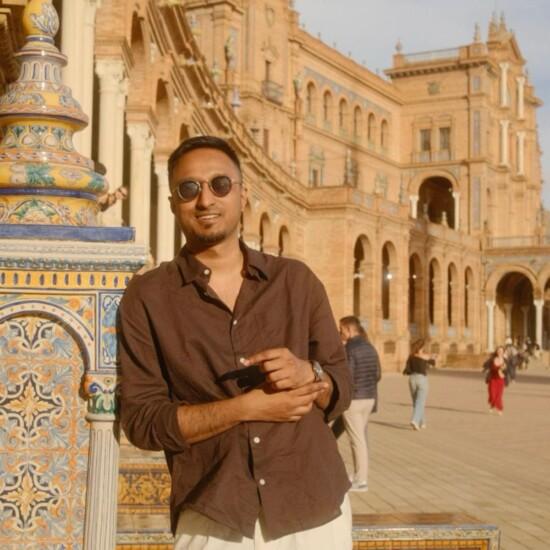
From 7 May to 17 May, I went to Spain: Madrid, Seville, Granada, and Barcelona. I called it the best trip of my life. This part of my journal feels different from the rest. It was not only meetings, work, sales, or investors. It was life.
Hari (2022) talks about how our attention becomes stronger when we slow down and become present. I felt that in Spain. I was still thinking about Tony and Agronomy because I mailed him the 50k paper for lawyer review during the trip. But still, Spain gave me a different kind of focus. I was seeing places, feeling culture, walking, eating, meeting people, and living outside the normal work pressure.
Maybe that is why the trip felt so important. It reminded me that I am not only a founder. I am also a person who needs experiences, friendship, travel, and memories. If all my attention goes only into work, then life becomes too narrow.
This does not mean I should work less always. But it means I need moments that refill me. Spain refilled me. Even though I became sick after coming back, mentally it gave me something.
Team Focus and Leadership
In May and June, I also started seeing focus from a team perspective. On 28 May, Petu was the main speaker for Agronomy in an event hosted by Tampere city. That was huge. We got two farms onboarded. On the same day, there were three events and then deliveries in Pälkäne. On 1 June, flyers were ready. On 2 June, we had a farm visit and videos were made. On 4 June, I had one-to-ones with everyone about being a leader of the team.
This made me think that a team also has attention. If the team’s attention is scattered, everyone does random things. But when the team knows the goal, energy becomes stronger. Agronomy needs that. We cannot chase everything at the same time: investors, farms, restaurants, social media, podcasts, events, delivery, student projects, competitions, and grants. Some of these are important, but not all at once.
Hari (2022) shows that attention is limited. That is true for a person, and I think it is also true for a startup. If we try to do everything, we may lose the depth needed to do the main thing well.
For Agronomy, the main thing should be clear: onboard farms, get orders, deliver well, build trust with customers, and prove the model. Everything else should support that. If it does not support that, maybe it is distraction.
What I Want to Change
After reading Stolen Focus, I do not think my life needs to become slow or boring. I am building a startup, studying at Proakatemia, leading projects, and trying to grow. My life will not be calm all the time. But I can still protect my attention better.
First, I want to stop starting my day with scrolling. That one thing can change a lot. If I give the first hours of my day to my phone, I already lose control.
Second, I want to sleep better before big days. Sales Days showed me that no sleep makes everything harder. I cannot prepare for 36 hours and expect my brain to work perfectly.
Third, I want to create deeper work blocks. For example, if I am preparing Tony’s numbers, then I should only do that. No TikTok, no random LinkedIn, no small messages unless urgent.
Fourth, I want to rest without guilt. Full rest days were rare, but when they happened, they helped. Cooking chicken, cleaning, laundry, talking to home, watching a movie, walking in Spain, these things also matter.
Fifth, I want to protect my emotional focus. Not every message deserves my energy. Not every negative person deserves space in my head. Not every delay from an investor should destroy my day.
These are small changes, but they are real. I do not want to only read the book and say it was good. I want to actually use it.
Conclusion
Stolen Focus helped me understand that attention is one of my most valuable resources. In April and May, I gave my attention to many things: Agronomy, EPIX, Sales Days, Tony, Frush, Tribe, Spain, family, friends, social media, and my own emotions. Some of it was meaningful. Some of it was noise.
The book made me realize that focus is not only about working harder. Sometimes focus means working less randomly. Sometimes it means sleeping. Sometimes it means not checking the phone. Sometimes it means choosing the right people. Sometimes it means saying no. Sometimes it means going to Spain and remembering that life is bigger than work.
I am proud that I can work hard. I am proud that I can push. But I also understand now that if I want to build something long term, I cannot burn my attention every day. Agronomy needs my energy, but it also needs my clear mind. My team needs me present, not just available. My family needs me calmer, not only ambitious.
For me, the biggest learning from Stolen Focus is simple: my attention decides the quality of my life. If I give it away to stress, phone, pressure, and random noise, I lose myself. If I protect it, I can think better, lead better, work better, and live better.
References
Hari, J. (2022). Stolen focus: Why you can’t pay attention—and how to think deeply again. Crown.